
Schools teach democracy. But do they teach children how decisions are made?
By Abir Ahmed, Campaigns and Communications Expert, IPE Global
A school may teach a child what a municipal corporation does. But does the child know whom to approach when the garbage outside the school is not collected? They may learn about the importance of water conservation, but do they understand why some neighbourhoods receive an adequate supply while others struggle? And when a public facility fails, do they know how to find out who is responsible?
These may seem like small questions. They are also questions about public policy.
Our school curriculum introduces children to democracy, the Constitution and the different levels of government. Yet, the connection between these concepts and the world children experience every day is often missing. Students learn about institutions, but rarely get an opportunity to understand how decisions are made, how public money is spent or how a problem can be taken from a classroom discussion to the attention of the authorities.
There is an opportunity here that schools have largely overlooked: introducing students to public policy through short, practical courses.
Public policy can sound like a subject meant for universities, government officials or those preparing for the civil services. In reality, it concerns the everyday choices that shape our lives—how cities manage waste, how public transport is planned, how schools receive resources and how governments respond to environmental challenges. These are not distant issues. Children encounter them in their own communities.
The classroom can be a good place to start making sense of them.
Consider a simple exercise. Students are asked to investigate why a public park in their neighbourhood is poorly maintained. They speak to residents, identify the agency responsible, look at the possible reasons and suggest what could be done. They then present their findings to a local representative.
The value of the exercise lies not just in the solution. Students learn to ask questions, look for evidence, listen to different perspectives and understand that public problems often involve competing needs and limited resources. They also learn that raising a concern is only the beginning; understanding how to act on it matters just as much.
There are examples of this approach elsewhere. The US-based Project Citizen programme, for instance, encourages students to identify a problem in their community, research possible solutions and present a policy proposal to public authorities. A 2015 study examining the teaching of public policy issues to senior secondary students also explored the relevance of such discussions within civics education.
Indian schools need not replicate any model in full. They can begin with what is close at hand. A lesson on local government could include a discussion on municipal services. A social science project could examine drinking water or waste management. Students could conduct neighbourhood surveys, hold mock council meetings or invite local officials to explain how a decision moves from a proposal to implementation.
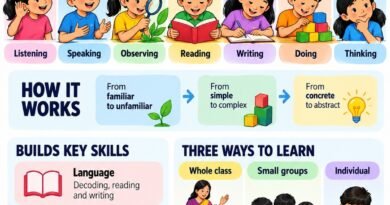
An eight-to-twelve-week module, with one session a week, could offer a manageable starting point. It need not become another examination-driven subject or add a heavy burden to teachers. The emphasis should be on inquiry, discussion and problem-solving, with activities suited to the age of the students.
There is, of course, an important distinction to maintain. Public policy education must not become political campaigning in the classroom. Its purpose is not to tell children which party or government to support. It is to help them understand institutions, examine evidence, recognise different viewpoints and form their own informed judgements.
This is particularly relevant at a time when young people encounter an overwhelming volume of information online. The ability to question a claim, distinguish fact from opinion and understand the context behind a public debate is not merely an academic skill. It is part of being an informed citizen.
Schools cannot be expected to solve every challenge in civic participation. But they can give children the confidence and tools to engage with public issues thoughtfully. Local bodies and civil society organisations, too, could support such learning through structured interactions and supervised student projects.
The first step does not require a major curriculum overhaul. It requires a shift in how we think about civics: not simply as a subject in which students learn the names and functions of institutions, but as an opportunity to understand how those institutions affect their lives.
Children already notice what is broken, unfair or missing around them. The question is whether we give them the tools to investigate why—and the confidence to imagine how things could be done differently.