
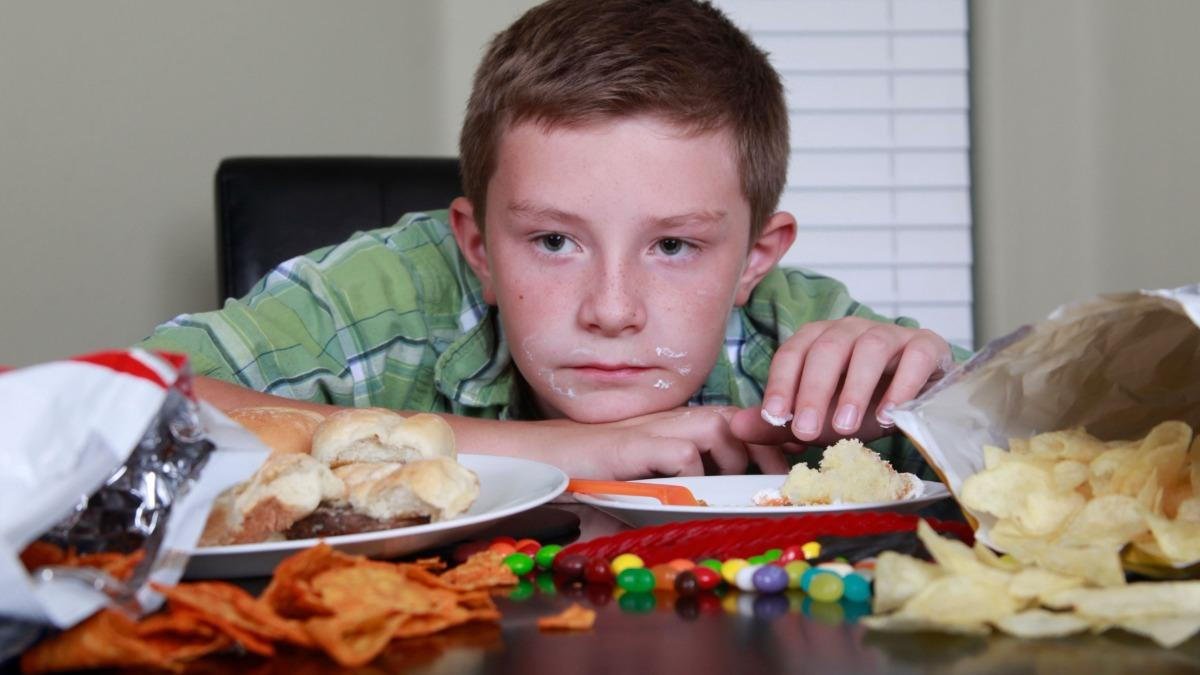
Children Know Junk Food Is Bad. But They Still Eat It
JAIPUR: Schoolchildren know that junk food is unhealthy. They know exercise is good for them and that healthy habits can keep diseases at bay. Yet, when it comes to their everyday choices, knowing what is right does not always mean doing it.
A recent study of schoolchildren in Jodhpur district has highlighted this gap between awareness and behaviour.
Published in PLOS ONE on July 7, 2026, the study looked at health habits and lifestyle challenges among children in rural and urban government and private schools in Jodhpur. Researchers interviewed 31 people — 18 students, six teachers, five parents and two school canteen staff. The students were from Classes VII to IX. The fieldwork was conducted between April and May 2024.
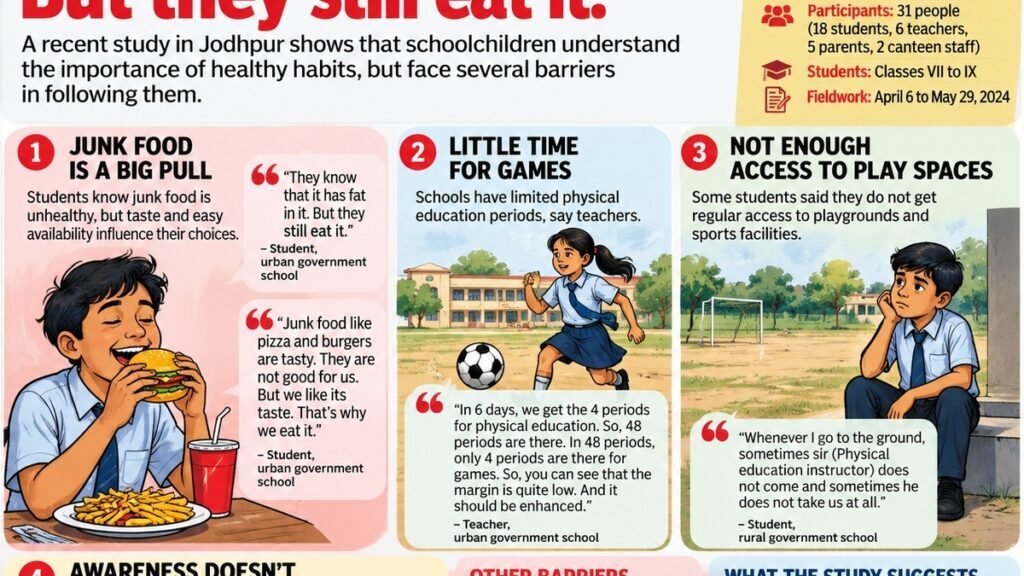
The researchers found that children generally understood the importance of a healthy lifestyle, but several factors made it difficult for them to follow healthy habits. These included the easy availability of unhealthy food, limited recreational spaces and socioeconomic factors.
One student summed up the problem simply: “They know that it has fat in it. But they still eat it.”
Another student said, “Junk food like pizza and burgers are tasty. They are not good for us. But we like its taste. That’s why we eat it.”
The study also points to another challenge — the limited time and opportunity children get for physical activity.
One teacher interviewed by researchers said schools had only a few periods for physical education compared with the overall timetable.
“In 6 days, we get the 4 periods for physical education. So, 48 periods are there. In 48 periods, only 4 periods are there for games. So, you can see that the margin is quite low. And it should be enhanced,” the teacher said.
Students also spoke about difficulties in accessing sports facilities. A student from a rural government school said, “Whenever I go to the ground, sometimes sir (Physical education instructor) does not come and sometimes he does not take us at all.”
The problem, therefore, is not simply that children lack awareness.
A teacher interviewed in the study put it more directly: “The difficulties are that students listen to you but does not follow you.”
The findings suggest that schools and families need to make healthy choices easier for children. That could mean better access to sports and recreational spaces, healthier food options and greater involvement of parents and teachers in shaping children’s daily routines.
The study also makes a larger point about health education. Telling children that junk food is unhealthy or that they should exercise may have limited impact if their surroundings encourage the opposite behaviour.
For schools, the questions are straightforward: Do children get enough time to play? Are healthier food options available? Are physical education periods being used effectively? And are parents involved in conversations about children’s diet and lifestyle?
The Jodhpur study offers a simple lesson: children may know what is healthy, but schools and families also need to create an environment where making healthy choices is possible.
Image Source: https://www.kidsvillepeds.com/blog/1328758-10-health-hazards-brought-about-by-junk-food/